Categories
نقطۂ نظر

نتیجہ وہی مگر شور نہیں

کتناعجیب سیاسی سفر ہے، کہاں مینارِپاکستان پر اکتوبر 2011ء کے جلسے کی بلندی اورکہاں بلدیاتی انتخابات میں ذلت آمیزپستی۔ ہمیں اکتوبر 2011ء کے بعدکا وہ ماحول بھی اَزبَر ہے جب گھرگھر کپتان کے چرچےتھے۔ تب لوگ کہتے تھے کہ ہر گھر سے بھٹو تو نہیں نکلا لیکن ’’سونامیہ‘‘ ضرورنکلتا ہے۔ کپتان صاحب کی شخصیت کا جادو سَر چڑھ کر بول رہا تھا اورپاکستان میں سوائے تحریکِ انصاف کے اور کوئی سیاسی جماعت نظرہی نہیں آتی تھی۔ پرنٹ اورالیکٹرانک میڈیا کے لیے کپتان صاحب بہت مرغوب ومحبوب تھے اورکالم نگار دھڑا دھڑ اُن کی شان میں قصیدے لکھ رہے تھے۔ وہ جہاں بھی جلسہ کرتے خلقِ خُدا ٹوٹ ٹوٹ پڑتی۔۔۔۔ پھرچشمِ فلک نے یہ عجب نظارہ بھی دیکھا کہ خاں صاحب کو لاہور کے صرف ایک حلقے (122) کے ضمنی انتخاب میں جیت کے لیے گلی گلی کی خاک چھاننی پڑی لیکن کامیابی پھر بھی مقدرنہ ٹھہری۔ حقیقت یہی ہے کہ کپتان صاحب شہرت کی بلندیوں پر پہنچ کر تیزی سے پستیوں کی جانب گامزن ہوگئے۔ وہ غلطی پہ غلطی کرتے چلے گئے اور ملم لیگ نواز ان غلطیوں سے بھرپور فائدہ اُٹھاتی رہی۔ پہلی غلطی یہ کہ اُنہوں نے نوجوان سونامیوں سے وعدہ تو صاف ستھری قیادت دینے کا کِیا لیکن اپنے گرد کرگسوں کا انبوہِ کثیر اکٹھا کر بیٹھے جس سے نہ صرف سنجیدہ طبقے بلکہ ’’سونامیے‘‘ بھی بَددِل ہوئے۔ دوسری غلطی 2013ء کے انتخابات سے پہلے ’’درون جماعت انتخابات‘‘ کرانا تھا جس میں کھُلم کھُلا دھاندلی ہوئی اورپیسے کا بے دریغ استعمال بھی۔ نتیجہ یہ کہ تحریکِ انصاف اندرونی ٹوٹ پھوٹ کا شکار ہوگئی۔ تیسری غلطی ، تقریباً تمام سیاسی جماعتوں کے بارے میں انتہائی غیرپارلیمانی زبان کا استعمال ہے جسے سنجیدہ طبقوں نے شدید ناپسندکیا۔ چوتھی اورسب سے بڑی غلطی 2013ء کے انتخابات کو تسلیم نہ کرنا اور دھاندلی کا شور مچاتے ہوئے احتجاجی سیاست کا چلن اپنانا۔ حیرت ہے کہ اُدھر قومی وبین الاقوامی جائزے خاں صاحب کی مقبولیت کوپستیوں کی طرف گامزن دیکھ رہے تھے لیکن پھربھی وہ پتہ نہیں کس برتے پہ کہتے رہے کہ تحریکِ انصاف دوتہائی اکثریت حاصل کرلے گی۔ انتخابات ہوئے اورنتیجہ شماریاتی جائزوں کے عین مطابق نکلا اور دو تہائی اکثریت کی دعویدار تحریکِ انصاف تیسرے نمبرپر رہی۔


پھرچشمِ فلک نے یہ عجب نظارہ بھی دیکھا کہ خاں صاحب کو لاہور کے صرف ایک حلقے (122) کے ضمنی انتخاب میں جیت کے لیے گلی گلی کی خاک چھاننی پڑی لیکن کامیابی پھر بھی مقدرنہ ٹھہری۔ حقیقت یہی ہے کہ کپتان صاحب شہرت کی بلندیوں پر پہنچ کر تیزی سے پستیوں کی جانب گامزن ہوگئے۔ وہ غلطی پہ غلطی کرتے چلے گئے اور ملم لیگ نواز ان غلطیوں سے بھرپور فائدہ اُٹھاتی رہی۔
خاں صاحب کی ایک اور غلطی خیبرپختونخوا حکومت کاحصول تھا۔ اُنہوں نے حکمرانی کے شوق میں حکومت توبنالی مگر پھر اُس کی طرف مطلق توجہ نہ دی۔ اگر وہ خیبرپختونخوا کو اپنے دعووں کے عین مطابق ’’مثالی صوبہ‘‘ بنانے کی تگ و دَوکرتے تو ہو سکتا تھا کہ 2018ء کے انتخابات اُن کے خوابوں کی تعبیر میں ڈھل جاتے لیکن اُنہیں تو وزیرِاعظم بننے کی جلدی ہی بہت تھی اِس لیے اُنہوں نے احتجاجی سیاست اور دھرنوں کا راستہ اپنایاجس نے رہی سہی کسربھی نکال دی۔ خاں صاحب کو تو یقین دلایا گیا تھا کہ اُدھر خاں صاحب ڈی چوک اسلام آباد پہنچے اور اِدھر امپائرکی انگلی کھڑی ہوئی لیکن وہ انتظار ہی کرتے رہے اور ’’انگلی‘‘ کھڑی نہ ہوسکی۔ بہترہوتا کہ خاں صاحب مولاناقادری کی طرح کوئی نہ کوئی بہانہ بناکر بستربوریا لپیٹ لیتے لیکن اُن کی ضد اور ہَٹ دھرمی نے اُنہیں روکے رکھا۔ 126 روزہ دھرنے میں خاں صاحب کے حصّے میں کچھ بھی نہیں آیا البتہ سیاسی طورپر اُنہیں بے تحاشہ نقصان ضرور پہنچا۔ یہی وجہ ہے کہ دھرنوں کے بعد جتنے بھی ضمنی انتخابات ہوئے کسی ایک میں بھی تحریکِ انصاف سُرخ رو نہ ہو سکی، حتیٰ کہ اُن کی اپنی حکومت کے زیرِ انتظام ہری پور میں ہونے والے ضمنی انتخاب میں اُن کے اُمیدوار کو 40 ہزارسے زائد ووٹوں سے شکست کاسامنا کرنا پڑا حالانکہ عام انتخابات میں یہ فرق محض چھ، سات سو ووٹوں تک محدود تھا۔


ویسے تو تحریکِ انصاف کے لیے لال حویلی والے شیخ رشیدہی کافی تھے لیکن ہوا یہ کہ چودھری سرور بھی گورنری ’’تیاگ‘‘ کر تحریکِ انصاف سے آن ملے اور ستم بالائے ستم یہ کہ اُنہیں پنجاب کا چیف آرگنائزر بھی بنا دیا گیا جس کا شاہ محمود قریشی نے بہت برامنایا اور وہ عملی طورپر ’’نُکرے‘‘ لگ گئے۔ نتیجہ سب کے سامنے کہ بلدیاتی انتخابات کے پہلے مرحلے میں تحریکِ انصاف کو ہزیمت کاسامنا کرناپڑا اور وہ تیسرے نمبرپر آئی البتہ چودھری سروربڑے فخرسے کہہ رہے تھے کہ اُنہوں نے جو اندازہ لگایا وہ بالکل درست نکلا کیونکہ اُنہوں نے تو تحریکِ انصاف کے لیے دَس فیصد کا اندازہ لگایا تھا جودرست نکلا۔ 19 نومبرکو بلدیاتی انتخابات کے دوسرے مرحلے پر نتیجہ پھر وہی۔ اِس مرحلے پرخاں صاحب کو اپنے آبائی حلقے عیسیٰ خیل میں بھی بدترین شکست کاسامنا کرنا پڑا اور تحریکِ انصاف 16 میں سے 15 نشستیں ہار گئی۔ اب چودھری سرور ایک دفعہ پھرکہہ رہے ہیں’’ ضابطۂ اخلاق کی دھجیاں اُڑائی گئیں، اربوں روپے کے فنڈز سے نالیاں اور گلیاں بن رہی ہیں اور سوئی گیس کے پائپ بچھائے جا رہے ہیں۔ عوام جانتے ہیں کہ بلدیاتی انتخابات سے حکومت تبدیل نہیں ہوتی اِس لیے بلدیاتی انتخابات حکومت کے ہوتے ہیں‘‘۔ اِس کے باوجود بھی وہ خوش کہ تحریکِ انصاف نے پہلے مرحلے سے زیادہ ووٹ لیے۔ اگر چودھری صاحب کی اِس بات کو تسلیم کرلیا جائے کہ بلدیاتی انتخابات حکومت ہی کے ہوتے ہیں تو پھر سوائے حکمران جماعت کے کوئی بھی سیاسی جماعت بلدیاتی انتخابات میں حصّہ ہی نہ لے۔ ویسے اطلاعاً عرض ہے کہ صوبہ سندھ میں پیپلز پارٹی بلاشرکتِ غیرے حکمران ہے لیکن پھر بھی بدین (جوپیپلز پارٹی کاگڑھ سمجھا جاتاہے) میں آصف زرداری صاحب کے سابق دوست اورموجودہ بدترین دشمن ذوالفقار مرزا نے پیپلزپارٹی کا جنازہ نکال دیا اور حیدرآباد ایم کیو ایم لے اُڑی۔ ملم لیگ نواز کے کسی بھی نامی رہنماء نے سرے سے سندھ کا رُخ ہی نہیں کیا لیکن پھر بھی اُس کے حصّے میں 100 سے زائد نشستیں آئیں جبکہ بلاول زرداری کے نئے ’’چاچا‘‘ عمران خاں سندھ میں جلسے کر کرکے تھک بلکہ ’’ہَپھ‘‘ گئے لیکن ملاکیا؟ صرف 8 نشستیں۔ تسلیم کہ حکمران جماعت کا تھوڑا بہت اثر ضرور ہوتا ہے لیکن اتنا بھی نہیں جتنا چودھری صاحب بتارہے ہیں۔ اگر ایساہی ہوتا تو وفاقی وزیرسارہ افضل تارڑ کے والد افضل حسین کو شکست کاسامنا نہ کرناپڑتا۔


19نومبرکو بلدیاتی انتخابات کے دوسرے مرحلے پر نتیجہ پھر وہی۔ اِس مرحلے پرخاں صاحب کو اپنے آبائی حلقے عیسیٰ خیل میں بھی بدترین شکست کاسامنا کرنا پڑا اور تحریکِ انصاف 16 میں سے 15 نشستیں ہار گئی۔
دوسرے مرحلے کے انتخابات کی ہمارے نزدیک سب سے مثبت بات یہ رہی کہ پہلے مرحلے کی طرح خونریزی دیکھنے میں نہیں آئی۔ دوسری مثبت تبدیلی یہ ہے کہ تحریکِ انصاف بھی ’’ٹھنڈی ٹھار‘‘ ہوکے بیٹھ رہی۔ حلقہ 122 کے ضمنی انتخاب میں تو چودھری سرور نے آسمان سرپہ اُٹھا رکھا تھا کہ تحریکِ انصاف کے ووٹرز کو راتوں رات دوسرے حلقوں میں منتقل کر دیا گیا لیکن ثبوت وہ کوئی ایک بھی پیش نہ کرسکے (اُنہوں نے اعلان کررکھا ہے کہ اگروہ ثبوت پیش نہ کرسکے تو سیاست چھوڑ دیں گے۔ پرویز رشیدصاحب اسی کو بنیاد بناکر اُن سے ایفائے عہدکا تقاضہ کررہے ہیں)۔ اب دیکھیں بلدیاتی انتخابات میں چودھری صاحب شکست کا کیا بہانہ تراشتے ہیں۔

Image Courtesy: Sabir Nazar

Categories
نقطۂ نظر

پی ٹی آئی؛ مطالبات درست طریقہ کار غلط

11 مئی کو اسلام آباد اور راولپنڈی کا موسم قدرے ٹھنڈا مگر سیاسی موسم خاصا گرم دکھائی دیا، مختلف عوامی مقامات پر عوامی تحریک نے جلسہ جمایا تو شاہراہ جمہوریت ڈی چوک پر تحریک انصاف اور عوامی مسلم لیگ نے اپنی سیاسی قوت کو مظاہر ہ کیاجبکہ فیض آباد انٹر چینج پر مجلس وحدت المسلمین نے دھرنا دیا۔ احتجاج کرتی ہو ئی تمام جماعتوں کے پروگرام الگ الگ مگر حکومت پر لگائے جانے والے الزامات بین بین ایک جیسے تھے ۔ لیاقت باغ میں جلسے کے دوران عوامی تحریک کے سربراہ ڈاکٹر طاہر القادری نے ملک کے اند ر رائج جمہوریت کو جھوٹی اور فریب زدہ جمہوریت سے تعبیر کیا ۔ طاہر القادری کے بقول پاکستان میں رائج پورے کا پورا سسٹم ہی آلودہ ہے جس سے پاکستان کے عام اور غریب شہری کو کسی خیر کی توقع نہیں رکھنی چاہیے۔ بہر کیف وہ پاکستان کے آئین کی علمداری پر یقین رکھتے ہیں اور ان کا مطالبہ بھی یہی ہے کہ 31سال کا عرصہ گزر جانے کے باوجود کوئی بھی حکومت آئین کے مطابق طے شدہ حقوق عوام کو دینے میں قاصر رہی ہیں اور اقتدار کی نچلی سطح پر منتقلی سے دانستہ طور پر رو گردانی کرتی رہی ہیں ، جس سے پاکستان میں جمہوری قدریں مستحکم ہونے کی بجائے اور زیادہ کمزور ہوئیں۔اسی غیر جمہوری رویہ کی وجہ سے عوامی فلاحی حکومت کے قیام کی بجائے نام نہاد خاندانی و موروثی جمہوریت نے لے لی جبکہ عوام محض تماشائی بن کر رہ گئے۔ طاہر القادری نے اپنے خطاب میں اپنے عوامی انقلاب کا ایجنڈا پیش کیا اور ان کے ایجنڈے میں دس نکات شامل تھے۔ ان دس نکات میں انہوں نے بے گھر افراد کے لیے گھر ، طویل مدتی بغیر سود کے قرضے ، روزگار الاونس ، کم آمدنی والے افراد کیلئے کھانے پینے کی اشیاء پر 50 فیصد سبسڈی ، بجلی، گیس پر عائد ٹیکس ختم کرنا، سرکاری انشورنس کا قیام ، یکساں نصاب تعلیم کے ساتھ میٹرک تک فری اور لازمی تعلیم، پیس ٹریننگ سنٹر کے قیام سے دہشت گردی و انتہاء پسندی کا خاتمہ ، گھریلو خواتین کے گھر کی سطح پر صنعتی یونٹس کا قیام، اقتدار کی گاؤں کی سطح تک منتقلی اور ہر ڈویژن کو صوبے کا درجہ دینا شامل ہیں۔
2013 کے الیکشن کو صاف و شفاف بنانے کیلئے حکومت اور اپوزیشن نے متفقہ طور پر نیوٹرل الیکشن کمشنر کو تعنیات کیا ، نئی انتخابی فہرتیں تیار کی گئی، مقناطیسی سیاہی کا استعمال کیا گیا، غیر متنازعہ وفاقی و صوبائی عبوری سیٹ اپ کے ساتھ ساتھ سابق ججوں پر مشتمل الیکشن ٹربیونل کا قیام عمل میں لایا گیا لیکن ان تمام انتظامات کے باوجود ہر سیاسی جماعت جہاں جہاں انتخابات ہاری وہاں وہاں اس نے الیکشن میں دھاندلی کا الزام لگایا۔
دوسری طرف عمران خان نے بھی موجودہ حکومت کے حاصل شدہ مینڈیٹ کو جعلی قرار دیتے ہوئے حالیہ الیکشن میں ہونے والی مبینہ دھاندلی کی تحقیقات کا مطالبہ کیا ۔ عمران خان کا کہنا تھا کہ ہم نے انتخابات کو تسلیم کر لیا لیکن دھاندلی قبول نہیں کی۔ عمران خان نے اپنی جماعت کے احتجاج کو جمہوریت کے لئے خطرہ نہیں بلکہ صاف اور شفاف انتخابات کے انعقاد کے مطالبے کو جمہوریت کے استحکام کی بنیاد قرار دیا ۔ انھوں نے کہا کہ تحریک انصاف نے صرف چار حلقوں میں دھاندلی کی تحقیقات کا مطالبہ کیا تھا لیکن سال گزرنے کے باوجود کوئی نتیجہ نہیں نکلا سکا۔ الیکشن سے قبل تمام سیاسی جماعتوں ، سول سوسائٹی ، میڈیا سمیت عام شہریوں کی نظریں الیکشن کمیشن اور خاص طور پر چیف الیکشن کمشنر فخرالدین جی ابراہیم کی طرف لگی تھیں کہ پاکستان میں شفاف انتخابات منعقد ہونے جا رہے ہیں لیکن انتخابات میں دھاندلی کی شکایات منظر عام پر آنے کے بعد اب سیاسی جماعتیں سپریم کورٹ کی طرف دیکھ رہی ہیں۔ 2013 کے الیکشن کو صاف و شفاف بنانے کیلئے حکومت اور اپوزیشن نے متفقہ طور پر نیوٹرل الیکشن کمشنر کو تعنیات کیا ، نئی انتخابی فہرتیں تیار کی گئی، مقناطیسی سیاہی کا استعمال کیا گیا، غیر متنازعہ وفاقی و صوبائی عبوری سیٹ اپ کے ساتھ ساتھ سابق ججوں پر مشتمل الیکشن ٹربیونل کا قیام عمل میں لایا گیا لیکن ان تمام انتظامات کے باوجود ہر سیاسی جماعت جہاں جہاں انتخابات ہاری وہاں وہاں اس نے الیکشن میں دھاندلی کا الزام لگایا۔
بی بی سی اردو کی رپورٹ کے مطابق الیکشن کمشن نے انتخابی نتائج سے منسلک شکایات سننے کے لیے چودہ ٹربیونائل بنائے اور قانون کے تحت انتخابی امید وار پنتالیس دونوں میں نتائج سےمتعلق شکایات داخل کروا سکتے تھے۔ الیکشن کمشن نے انتخابی نتائج سے منسلک چار سو دس شکایات الیکش ٹربیونلز کو بھیجوائیں اور قانون کے تحت الیکشن ٹربیونلز کو ایک سو بیس دنوں یعنی چار ماہ میں شکایات سننے کے بعد اپنا فیصلہ سنانا تھا لیکن ابھی بھی کئی سو پٹیشنز زیر التوا ہیں۔ اسی طرح پاکستان میں انتخابات کے اعداد و شمار اکٹھا کرنے والی غیر سرکاری تنظیم فری اینڈ فئیر الیکشن نیٹ ورک (فافین) کی رپورٹ کے مطابق مارچ دو ہزار چودہ تک الیکشن ٹربیونلز نے چار سو دس شکایات میں سے تین سو پچاسی درخوستوں پر فیصلہ سنایا جبکہ باقی شکایات کے فیصلے آنے باقی ہیں۔حکومت اور اپوزیشن رہنما ان سیاسی اجتماعات کو جمہوریت کے لیے خطرہ سمجھ رہے ہیں۔ ان کے خیال میں ان جلسے جلسوں کے نتیجے میں ملک میں غیر جمہوری قوتوں کواقتدار میں لانے کا موقع مل جاتا ہے جس کا پاکستان متحمل نہیں ہو سکتا۔ وفاقی وزیر داخلہ چوہدری نثار علی خان نے میڈیا سے بات کرتے ہوئے کہاکہ عمران خان کے مطالبات حکومت سے نہیں ہیں مگر پھر بھی حکومت کے دائرہ اختیار میں جو کچھ ہے وہ کرنے کو تیار ہیں۔ انھوں نے کہا ’انھیں(عمران خان) اعتراضات ہیں تو الیکشن ٹربیونلز اور الیکشن کمیشن سےہیں ، اعلیٰ عدالتوں کے پاس تحریک انصاف کی شکایات سننے اور ان کا ازالہ کرنے اختیارات ہیں اور اعلیٰ عدالتیں آزاد ہیں، حکومت کے پاس کوئی ایسا اِختیار نہیں ہے۔
تحریک انصاف کی شکایات اور احتجاج کا جمہوری حق بجا لیکن سڑکوں پر احتجاج سے قبل تمام آئینی راستے اختیار کر لینا ضروری ہے۔تحریک انصاف احتجاج کے ذریعے اگر اپنے مطالبات منوانا چاہتی ہے تو اس کا مطلب ہے کہ وہ پارلیمنٹ اور مسلم لیگ نون کو انتخابات کے ذریعے ملنے والے عوامی مینڈیٹ کو کوئی اہمیت نہیں دیتی اور سٹریٹ پاور کے استعمال سے تصادم اور ہنگامہ آرائی کی سیاست کے ذریعے ملک کو عدم استحکام سے دوچار کر کے نئے الیکشنز اور حکومت پر قبضہ چاہتی ہے۔
بی بی سی سے بات کرتے ہوئے پاکستان میں جمہوریت پر کام کرنے والی غیر سرکاری تنظیم PILDAT کے چئرمین احمر بلال صوفی نے کہا کہ الیکشن کمشن اور انتخابی نظام کو شفاف بنانے کے لیے پارلیمان میں رہتے ہوئے کوشش کرنی چاہیے۔ انھوں نے کہا کہ ’ مسئلہ ہے تو اُسے حل کرنے کے لیے قانون بنانا پڑے گا،کوئی ترمیم لانا پڑی گی۔ پارلیمنٹ میں تو آپ خود بھی ہیں آپ ترمیم لا سکتے ہیں قانون لا سکتے لیکن یہ راستہ انھوں نے بالکل چھوڑ دیا ہے۔ لیکن سوال یہ اٹھتا ہے کہ پاکستان میں حکومت اور دیگر ادارے کیوں اپنی ناقص کاردگردگی کی بناء پر ایسا مواقع کیوں فراہم کرتے ہیں کہ مخصوص جماعتیں ایسے ہنگامے برپا کرنے پر تل جاتی ہیں۔ اس بات میں کوئی شک و شبہ نہیں کہ مستحکم جمہوریت ہی میں پاکستان کا روشن مستقبل پنہاں ہے مگر جمہوریت وہ ہوتی ہے جس میں جمہور کی بہتری اور خوشحالی کی ضمانت موجود ہو مگر پاکستان میں ہر آنے والے جمہوری حکومت نے جمہور پر عرصہ حیات تنگ کئے رکھا۔ان جمہوری ادوار میں کرپشن، اقرباء پروری ، رشورت ، سفارش، دھونس دھاندلی ، قتل و غارت اور غربت جیسے مسائل میں مزید اضافہ ہوا۔
تحریک انصاف کی شکایات اور احتجاج کا جمہوری حق بجا لیکن سڑکوں پر احتجاج سے قبل تمام آئینی راستے اختیار کر لینا ضروری ہے۔تحریک انصاف احتجاج کے ذریعے اگر اپنے مطالبات منوانا چاہتی ہے تو اس کا مطلب ہے کہ وہ پارلیمنٹ اور مسلم لیگ نون کو انتخابات کے ذریعے ملنے والے عوامی مینڈیٹ کو کوئی اہمیت نہیں دیتی اور سٹریٹ پاور کے استعمال سے تصادم اور ہنگامہ آرائی کی سیاست کے ذریعے ملک کو عدم استحکام سے دوچار کر کے نئے الیکشنز اور حکومت پر قبضہ چاہتی ہے۔
ایک مستحکم جمہوریت کے لئے پاکستان میں موجود تمام اداروں کو اپنے اپنے آئین میں متعین شدہ حدود کے اندر کام کرنا ہو گا اور اداروں کی تکریم کو مقدم رکھنا ہوگا۔ جمہوریت میں پرامن احتجاج کو حق ہر شہری کو حاصل ہے لہذا عوام کے جمہوری حق کو شک کی عینک لگا کر دیکھنا صریحاً غلط ہے ۔ عوام کے جائز مطالبات کو پورا کرنا حکومت وقت کی آئینی ذمہ داری ہے ۔ جمہوریت کو اگر بچانا ہے تو سب کو اپنا اپنا مثبت کردار ادا کرنا ہو گا جس میں سب سے بھاری ذمہ داری حزب اختلاف خصوصاً تحریک انصاف پر عائد ہوتی ہے۔
Categories
نقطۂ نظر

An open letter to Imran Khan, Chairman PTI

Sheema Mehkar

youth-yell-inner

Dear Mr. Khan,

Before I proceed, please honor my request to call you Khan Sb like majority does. Khan Sb, without any hesitation I declare to be a proud supporter of PTI. On May 11, 2013, I casted my first ever vote to Imran Khan; for believing in all what PTI made me dreamt. Khan Sb, I accept, I haven’t done anything substantive for PTI to prove my adoration and respect for you. I might be standing far away from reality, with the most ignorant mind and incompetent soul. I am obligated to admit it here because many would question my right to say whatever I am going to say. Others might comment as if you don’t know and (Ah!) it is easy said than done. Khan Sb, I also seek pardon in advance as I never talked to anyone big like yourself. All this may sound gushy nonsensical rhetoric and probably no one on this planet would ever understand it. But, Khan Sb, you surely will understand. I am very sure of that.

Unlike many, Khan Sb, I am privileged to reside in the safest zone of Islamabad. I am blessed not to experience any loss of my dear ones in any terror blasts. Other night, a mere thunder made me fell off the bed subconsciously imagining if it’s a bomb blast outside and I am about to die. Khan Sb, we have reached at a verge of ‘agony’. Pakistan is sinking in the flood of terrorism and extremism; you know more than I do that where we are heading to. So, let me jump to the conclusion. Khan Sb, prior to the elections PTI claimed to be the only party well armed with ‘Counter Terrorism Policy’. Condemnations are becoming futile. Sympathies now get scars deepen and breed more hatred. People now prefer politicians to stay mute instead of uttering callous statements and making fake promises; they have stopped believing, Khan Sb. With huge disappointment, the same condemning statements are dragging PTI in parallel to the other parties and significantly your kind self to other politicians. The later aspect is a bigger woe as people really want to believe in you, Khan Sb. But, if the course remains the same; I worry, it might not last long, Khan Sb. For a second, I, like million others, can’t doubt your intention and integrity. But, Khan Sb, time is very cruel. It doesn’t weigh one as who has good intentions, but, who ‘did’ and who ‘didn’t’. The question is not that you don’t want or you can’t or you will not, but, when??

What if APC for yet another time will prove a fiasco? What if COAS will not agree in holding ‘closed-door-meetings’ with you? What if truth will never be told to you? What if Government will not come up with any strategy? That means we should stop hoping that somebody will save us? A deep-seated confusion persists on the subject matter, driving everyone’s head go spun. Khan Sb, I tell you, people vouch for your words. So, are you sure you are as clear on it as you are on the issues like rigging and governance in KPK?, I dare to ask. People are least concerned as whose war is this, what ‘behind the stage’ is going on and how complicated things are; they want one thing, ‘a solution’. They are ready to sleep with empty bellies, but, not with empty homes. Yes, I second, unless the complete truth is known strategies can’t be made. If nothing else, bring to us the policy that PTI claimed to have. Begin it with “as per the available information and truth…”, we will understand, Khan Sb. All this is not for a political sixer, but, those searching for a clue and direction may take guidance from it; even if it is of minute help.

Khan Sb, you made us believe in “Iyyaka Na’budu Wa Iyyaka Nasta’een”, ‘will’ we can witness, clearly, your bona fide demeanor is a testimony to that. Now a ‘substantive struggle’ beyond ‘…we strongly condemn’ rhetoric is awaited. I strongly wish some extraordinary upshot from the Government, but, all the expectations are decaying with each passing day. Khan Sb, people look up to you as their last hope and hopes bonded to you are too strong to die. But, there exists a fact: emotions are indigent of physical achievements. The clock is ticking and we are dying. Khan Sb, please save us!


(Sheema Mehkar is a Business Graduate from Quaid-i-Azam University, Islamabad. Currently she is working in an educational institution as a Faculty Development Program Officer.)


Also published in The Frontier Post

Categories
گفتگو

Playing the ‘Kaptaan’

Annam Lodhi

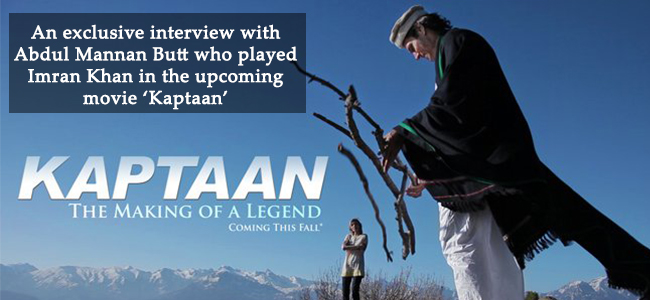
An exclusive interview with Abdul Mannan Butt who played Imran Khan in the upcoming movie ‘Kaptaan’

kaptaan-inner

Releasing this May is director Faisal Aman Khan’s ‘Kaptaan’ – a film based on the life of cricketer-turned-politician Imran Khan after retiring from the world of cricket, entering politics and all the events that occurred in his life up to 2010. News of the film first broke in 2011, when the teaser track ‘Allah Hoo’ was released. Since then the movie has faced some delays but is now considered one of the most awaited films of 2013, despite a notable lack of widespread publicity.

The lead actor Abdul Mannan Butt is adding to his repertoire of modelling and photography by debuting as an actor in this film. A rapidly rising star (who actually bears an uncanny resemblance to Imran Khan and Hrithik Roshan), Mannan is a true Lahori and an amazing host. As I sat down to interview him, I must admit to being initially star-struck, but as we continued to talk the 32-year-old proceeded to make me feel comfortable and welcomed. And here is what he had to say:

Laaltain: So how did you get to where you are today?

Mannan:  Now that is some story – at least for me. I used to go to Anarkali regularly to learn typing, and in 1998 as I was passing by the place one day I was spotted by Khawer Riaz. Despite my repeated warnings to him that I knew nothing about modelling, he insisted that I come to his office. I figured I had nothing to lose so I ended up going. Having no background in modelling and the industry not being as popular back in the day, I had no clue as to who I was meeting. He was nice enough to introduce me to his family, after which he showed me some portfolios of top models. That’s when it sunk in who he actually was. Back then I knew it was a risky decision to enter this field, but I was curious so eventually agreed to try it out. I got my portfolio made and he forwarded it to other agencies. I still remember how happy my family was when they saw my commercial for the first time. [smiles]

Laaltain: So did you just carry on after your first commercial?

Mannan: Actually I kind of lost interest after that first commercial as I felt my curiosity had been sated. I received a handful of calls with offers for more work but I didn’t accept any of them, usually making up one excuse or another. As I said, I wasn’t as curious anymore, and it was just a hobby for me. My main goal was actually to become a businessman.

The kind of pressure involved in trying to depict someone like Imran Khan, who is clearly considered a living legend, is – to put it lightly – a backbreaker.

Laaltain: Then what brought you back?

Mannan: As clichéd as it may sound, it was when my interest was sparked once again. In 2000 I was selected for a fashion show. There were 70 of us, and I, for whatever reason, was in the top 7. I experienced a new high with that show, so in 2005 I joined the industry on a professional level. That is when it all really began for me. It wasn’t smooth or easy, but I was in it for the long-haul this time.

safe_image

Laaltain: Was the way to ‘Kaptaan’ easy?

Mannan: Well, around two years ago one of the agencies recommended that I approach Faisal Aman Khan, as he had apparently been trying to contact me. So I called him up and was asked to meet immediately. I went through the normal routine of screen tests and auditions, then they signed up Saeeda Imtiaz [who plays Jemima Khan in the film] and the work began in Pakistan.

Laaltain: You even look like Imran Khan!

Mannan: [Laughs] Yes, I have been told a few times. I think that is one of the main reasons I landed this role. But thank you, I can’t help but feel flattered every time someone says that.

Laaltain: How did the idea for ‘Kaptaan’ come about?

Mannan: Faisal, our director and producer, got his degree in filmmaking from the UK. He had the idea two years after he graduated, so he started the project independently, even writing the story on his own. He then met and interviewed Imran Khan in the UK regarding the project. Even my selection was done there.

Laaltain: Has this project received a lot of support from the PTI?

Mannan: Financially, no. But that is not the only support one needs. PTI was very helpful in every other aspect of the project. This being a biographical film, Imran Khan provided us with his life’s details when needed. As for PTI itself, they helped us shoot in places where, for many political reasons, a shoot would not really be possible.

Imran Khan is a leader. He does what he says. He made it his mission to win the World Cup, and it happened. With the current situation, the change will come slowly but surely.

Laaltain: Then where did the money come from?

Mannan: Faisal has financed the project himself. The budget is pretty modest; there is no sign of extravagance in the film. An independent project usually doesn’t get much financial help, so we tried to make do with the funds we had. This meant not being able to build sets from scratch, but as I said before, with PTI and Imran Khan’s help we were able to shoot in a lot of original locations, and that obviously helped a great deal.

Laaltain: Was there anything in particular that drew you to this project?

Mannan: Apart from an obvious appreciation for Imran Khan himself, it would definitely have to be my own experiences as well.  Like him, I lost one of my parents, my father, to blood cancer. It made me very hostile and I just wanted to do something to fight the disease. Naturally, thinking and doing are not the same thing. While I was only able to think about it, Imran Khan actually made things happen. Maybe I couldn’t do what he did, but the least I can do is relay his story to the world. Apart from this, it is any actor’s dream to work with a director who is not afraid of taking risks, and Faisal is exactly that type of guy. He doesn’t use the clichéd styles of directing we often see in Pakistan and I appreciate his methods.

Laaltain: Would it be an understatement to say that portraying the role was hard?

Mannan: Oh most definitely! The kind of pressure involved in trying to depict someone like Imran Khan, who is clearly considered a living legend, is – to put it lightly – a backbreaker. In a more visual way, growing my hair was one of the hardest parts. I have always had short hair, and it took me a good while to get it that long. Apart from that, copying his voice, mannerisms and body language was hard. But I went through his videos on YouTube and learned what I could. Another difficulty was copying his bowling style. I had to practice a lot to get it right.

A screenshot from the Movie 'Kaptaan'
A screenshot from the Movie ‘Kaptaan’

Laaltain: And what about shooting problems?

Mannan: Shooting in PTI-related areas was fairly easy, thanks to their support. The real issue came in respect to other political parties like PML(N) and MQM. When we tried to shoot in locations related to these parties we were regularly denied access or NOCs. So that was undeniably one of the issues. Overall, people refused co-operate because they belonged to other parties, or were in general against Imran Khan.

Laaltain: So tell us more about the movie itself.

Mannan: Well, it’s based on Imran Khan’s life. It focuses on all the highs and lows he experienced, starting from his cricket days but mainly focusing on events from his retirement up till 2010. The rest you will have to watch!

Laaltain: Does the name Kaptaan have to do with anything more than captaincy as a cricket player?

Mannan: A captain is someone who leads or commands. He has done it throughout his life. First with cricket, then cancer, then education and finally politics. Captaincy is his symbol, no matter what the context.

Laaltain: Would you mind telling us about the threats you received after the movie was announced?

Mannan: Oh several threats were received by both Saeeda [portraying the role of Jemima Khan] and myself. Having spent my whole life in Pakistan I have become immune to such things. However, Saeeda is a US citizen and for her it was a different story. After initially ignoring the issue, we finally had to complain to the police. Eventually the person responsible was found; his main objection was about how making this movie is haraam and against Islam. But he was just an individual acting alone, and we later also discovered that he was mentally ill.

Laaltain: Speaking of Saeeda Imtiaz, how was your experience with your first co-star?

Mannan: It was great. We developed an instant connection. She is a very humble person and adjusts well to her surroundings. I have worked with other women as co-actors and anchors, but I found working with Saeeda was exceptionally easy.

Laaltain: The movie’s release has been delayed already. Why?

Mannan: Money and politics. Our budget and various political reasons have been the main problem.

Our country excels in music and fashion, but lacks in filmmaking. It needs better directors and writers who do not play the old horse background music [laughs]. I would also like to promote film making amongst the youth so that more of them can study it and enter the field.

Laaltain: When can we expect a release?

Mannan: Insha Allah by the end of April.

Laaltain: Let’s talk about the politics now. Do you think PTI will fulfil its promises if it comes to power?

Mannan: We talked about this before. Imran Khan is a leader. He does what he says. He made it his mission to win the World Cup, and it happened. With the current situation, the change will come slowly but surely. During the course of his life, he has been shunned an ample amount of times. But he proved them all wrong. He pushed it all aside and did what he wanted to do. And to this day nothing has changed. He is still told off, and just as he has done before he will come out of the pressure and prove everyone wrong again. That is if he is given the chance.

Laaltain: You are free to stop or decline to answer if this one feels too political. But Imran Khan has been criticized for having corrupt members in PTI now. What is your take on this?

Mannan: Going back to Imran Khan’s one important skill: captaincy. He has to give everyone an equal chance and then weigh each one’s strengths and weaknesses. It is then his job to see who he wants to play and when. I think Imran is a captain in its truest sense, and knows exactly what he is doing. We need to keep in mind, though human, he is a leader. And his job is to think what everyday minds can’t.

Laaltain: Coming back to you, you have ventured into so many fields. What do you think the future holds now?

Mannan: I want to continue working on many projects, although I have learned to be selective with the passage of time.

I’m open to directing as well. Our country excels in music and fashion, but lacks in filmmaking. It needs better directors and writers who do not play the old horse background music [laughs]. I would also like to promote filmmaking amongst the youth so that more of them can study it and enter the field. Photography is also a great passion with me. I still do wedding photography.

Hopefully one day I will also fulfill my dream of starting a business.

Laaltain: Clothing line business maybe?

Mannan: Oh no, not at all. There are too many of those already. Maybe a men’s perfume line, manufactured solely in Pakistan. I think this country holds a lot of potential; people just need to go out there and explore it. On an unrelated note, I think there is also a lot of talent in Pakistan. Our whole crew was Pakistani. It was truly heartening to see.

Laaltain: And finally, any message for the youth?

Mannan: It may sound stereotypical, but do not stop studying. I have seen all these young people being charmed by the industry, but not everyone succeeds and not everyone is appreciated. I am not trying to demean anybody here. The basic truth is that some people have monopolised the field, and they don’t let newcomers in that easily or at all. It is a good industry, but it’s important not to let it cloud your other talents and ideas. There is a lot to learn and I suggest you keep exploring yourself, what you are good at or great at. If you find yourself a godfather, lucky you! Otherwise, become your own godfather. Know what people expect from you, what you can give and how you can do it.

Laaltain: Oh, and to break many hearts when are you set to tie the knot?

Mannan: [laughs shyly] well I am not engaged, I am waiting to get married. But it will happen soon Insha Allah.

Laaltain: Will it be love or arranged?

Mannan: It will be my mother’s choice, but of course it goes both ways. [smiles]

Categories
نقطۂ نظر

‘Good looking Jamaat-e-Islami’

The Jamaat-e-Islami (JI) has significant influence in Pakistan’s domestic politics due to its strong representation in the media, its ability to show street power and its connection with both the security establishment and militant outfits. However, as far as its vote bank is concerned, it hasn’t done too well. The main reason for this could be that the JI carries the tag of Deobandi Islam, which most Pakistanis do not follow. Another reason is that although the general public is very narrow-minded and conservative in its religious outlook, it is very liberal and secular when it comes to personal lifestyle. It wishes death on ‘kafir’ (infidel) India; but will not stop watching Indian movies. It likes to hate the USA with a passion; but craves an Americanized way of living.

Both Pakistan’s establishment and the JI have felt the need to have a front organization with a moderate semblance for quite some time now – one which has the potential to win popularity in the masses. This desire was reflected in the JI’s creation of Pasban in the early 1990s. Its name was changed to Shabab-e-Milli when Pasban was banned in 1995 after its involvement in violence. Apparently, these were independent organizations; yet it was too obvious that they were JI protégés. The public postures of these organizations leaned more towards nationalism than Islam. To arouse enthusiasm, patriotic songs were played with music in Pasban’s rallies, which was against the traditional JI culture. The Cricket World Cup victory of 1992 was celebrated by Pasban all over Pakistan by holding Junaid Jamshaid’s ‘Pepsi-Pakistan’ concerts. Pasban was publicised in all possible ways. It, however, lacked a leader possessing the magnetism necessary to attract the public. Both the JI and Pakistan’s deep state were looking for a charismatic character like Jinnah and ZA Bhutto – someone who had the glitz of Western culture but a mindset of an Islamist. One senior JI member who had previously been the nazim of the Islami Jamiat Talaba (IJT) at Punjab University, Hafeez Ullah Niazi found the right person for this job. Niazi happened to be the brother-in-law of the cricketing super star, male sex symbol and Casanova of international repute, Imran Khan.

JI’s early nurturing of Imran

It was easy for Hafeez Ullah to preach Maudaudi’s Islamic ideology to Imran, who, after enjoying the best of this world was perhaps seeking the same for the next world.

Imran retired from cricket first in 1987, after his team’s defeat in the World Cup semi-final at Lahore, but reversed his decision at the insistence of General Zia ul Haq. After winning the 1992 World Cup as captain, he attained the status of a national hero, after which he finally hung up his cricket shoes. A series of articles written by Imran from 1987 to 1992, in which he criticised western culture and the British Empire and emphasised the promotion of one’s own Islamic-nationalistic identity, reflected the JI’s brainwashing. The JI had got hold of Imran in the early stages of his reversion to his native culture.

Imran, who wished to remain in the public eye even after retiring from cricket, started building a non-profit cancer hospital in Lahore. Pasban helped him in organizing the fundraising campaign for this purpose. Here, another double standard of the JI was exposed. Since the mid 1980s, Pakistani artists had been performing in shows in India. In return, event organizers in Pakistan tried to invite Indian artists to Pakistan. However, all such events had to be cancelled due to vociferous threats by Pasban. But in 1995 when Imran invited Indian movie stars such as Rekha, Vinod Khanna, Sonu Walia and Kabir Bedi to perform in Lahore for the fundraising of his hospital, Pasban did not object even a bit.

Similarly, JI has always slandered its rivals by finding faults in their personal lives. For instance, in the 1970s it targeted the ‘un-Islamic life style’ of ZA Bhutto. In public speeches and in slogans, it called Bhutto “sharabi” and “za’ni” (alcoholic and adulterer). However, Imran’s colorful life never bothered the JI. In the case of Bhutto, the JI went as far as to allege that his mother was a Hindu. When in 1994 Imran, the critic of Western culture and British aristocracy, married a woman from a British Jewish elitist background, JI did not even raise an eyebrow.

Making of PTI under JI’s fostering

Imran’s links with the JI are too obvious. Initially JI’s Qazi deployed its expert campaign designers along with two of Pasban’s founding members – Shabbir Sial and Mahmood-ur-Rasheed (elected as member of the Punjab Assembly on a JI/IJI ticket in 1988) – to help Imran organise his campaign for the 1997 election. The JI itself boycotted that election. Sial later served PTI as its president in Lahore, a position now held by Rasheed.

Ejaz Chaudhry, PTI’s vice president and incharge youth affairs, considered to be Imran’s closest adviser, is ex-JI and son-in-law of Maududi’s immediate JI successor, Mian Tufail Muhammad. Another VP of PTI, Abdul Hafeez Khan, is an ex-IJT nazim of Punjab University.

Since its inception, PTI’s governing body has been populated by ex-members or sympathizers of the JI. Usually, two parties develop a rivalry if members of one are snatched by the other. But in this case, JI members joined the PTI on the behest of JI, under an orchestrated infiltration of an up and coming party. Not only was Imran quick to forgive the IJT when its workers manhandled him at Punjab University in 2007, but the person he appointed as chief of PTI’s student wing (ISF), Ehsan Niazi, is also ex-IJT. Students running from the IJT because of its hoodlumism and joining the ISF will again find themselves under an ex-IJT man.

As elections draw near, the growing popularity of the PTI will attract opportunists from all political backgrounds. However, PTI will most likely retain its core group that has JI’s ideology deep-seated in its heart and mind.

PTI connections with Jihadists

During 1995-1996, just before the launch of PTI, Imran had numerous meetings with General Hamid Gul. Newspapers of the time were full of speculations that Imran and Gul were jointly launching a party to provide an alternative leadership to those fed up with bipartisan politics. This did not happen, probably to avoid the exposure of Imran’s close links with former members of the security establishment who were still close to Jihadi outfits.

However, Lt. General Mujeeb-ur-Rehman, who had served as secretary information during Zia-ul-Haq’s regime and was said to have close links with the security establishment, was one of the founding members of PTI and went on to become its secretary general. It is also worth noting that in 1997, soon after the launch of PTI, Imran toured Chechnya where, for one week, he was the guest of the president of Chechnya, Mujahideen rebel leader Aslan Maskhadov, who later instituted full sharia law in Chechnya.

Furthermore, PTI’s soft, apologetic stance on the Taliban issue is a well-known fact. Imran has been opposing military operations against the Taliban and trying to justify the movement as a “Pushtoon nationalist resistance against occupation forces”. He has been one voice with Islamist parties on the issues of war on terror, drone attacks, Aafia Siddiqui, Raymod Davis etc.

Imran’s right hand man, Ejaz Chaudhry, has close links with fanatic sectarian organizations like Sipah-e-Sahaba Pakistan. Chaudhry actively participated in the rallies of another extremist organization, Aalmi Majlis Tahaffuz KhatmeNubuwwat, notorious for its extreme hatred and incitement to violence against Ahmadis. Chaudhry took the podium at a rally held by them in favour of Mumtaz Qadri (the self-confessed killer of Salmaan Taseer) where he declared that he spoke for Imran Khan when he said that the blasphemy law is a godly law that no one should dare touch. Moreover, his discourse on the alleged involvement of the CIA and RAW in the PNS Mehran attack is identical to TTP-SSP-LeJ-JI rhetoric.

When in 2007 Imran was arrested protesting against the declaration of emergency by General Musharraf and detained in D.I. Khan Jail, the then TTP President Baitullah Mehsud threatened to blow up the jail if Imran was not released. His statement appeared in all leading newspapers and Imran was released within 24 hours. Later on October 02, 2008 when Mehsud made a public appearance in South Waziristan, local president of PTI Toofan Burki garlanded him and put a traditional pagri (turban) upon his head.

Another PTI member, Shireen Mazari (also known as ‘Lady Taliban’), who is its spokesperson and adviser on foreign affairs, is known for her advocacy of conspiracy theories in the media. She writes a regular column for the website run by Ahmed Quraishi (who gives Zaid Hamid a run for his money in promoting baseless theories to blame atrocities and actions of the Taliban on others). Mazari is said to have close connections with the security establishment. She is a regular lecturer at the National Defense College where her specialized subject is Islamic ideology. If the curriculum of the ‘educational revolution’ that Imran Khan wants to bring in Pakistan is going to be designed by likes of Mazari, then our schools will produce more Taliban than even madrassas do.

Will PTI deliver?

In his recent rally in Lahore, Imran Khan said nothing new but pushed the single-point thesis of the establishment in which all the problems of the country are attributed to the corruption of the politicians. This is the agitprop that the deep state of Pakistan has been amplifying through the media since the restoration of the democratic system in 1988 and on the pretext of which many elected governments were dismissed halfway through their mandated period. Imran has strengthened the belief of the common man that corruption really is the actual cause of all his miseries, which is only a small part of the truth. The hyperbole of this overstatement has always been aimed at playing down and concealing the root cause of the country’s actual distress, which in fact is the jingoism and martial plans of our establishment. The establishment is eating up our country’s limited resources and, along with the bigoted mullahs, is the major obstacle to our nation’s progress. Imran Khan represents both these elements.

This disparate nation is once again seeking a remedy for its problems from the source of the problem itself. If Imran Khan now has the cure of the problems of the country, then the JI had it all along. In that case, the people of Pakistan were fools for not electing the JI a long time ago.